
Buying Raw Honey Directly From a Local Beekeeper: A Guide!
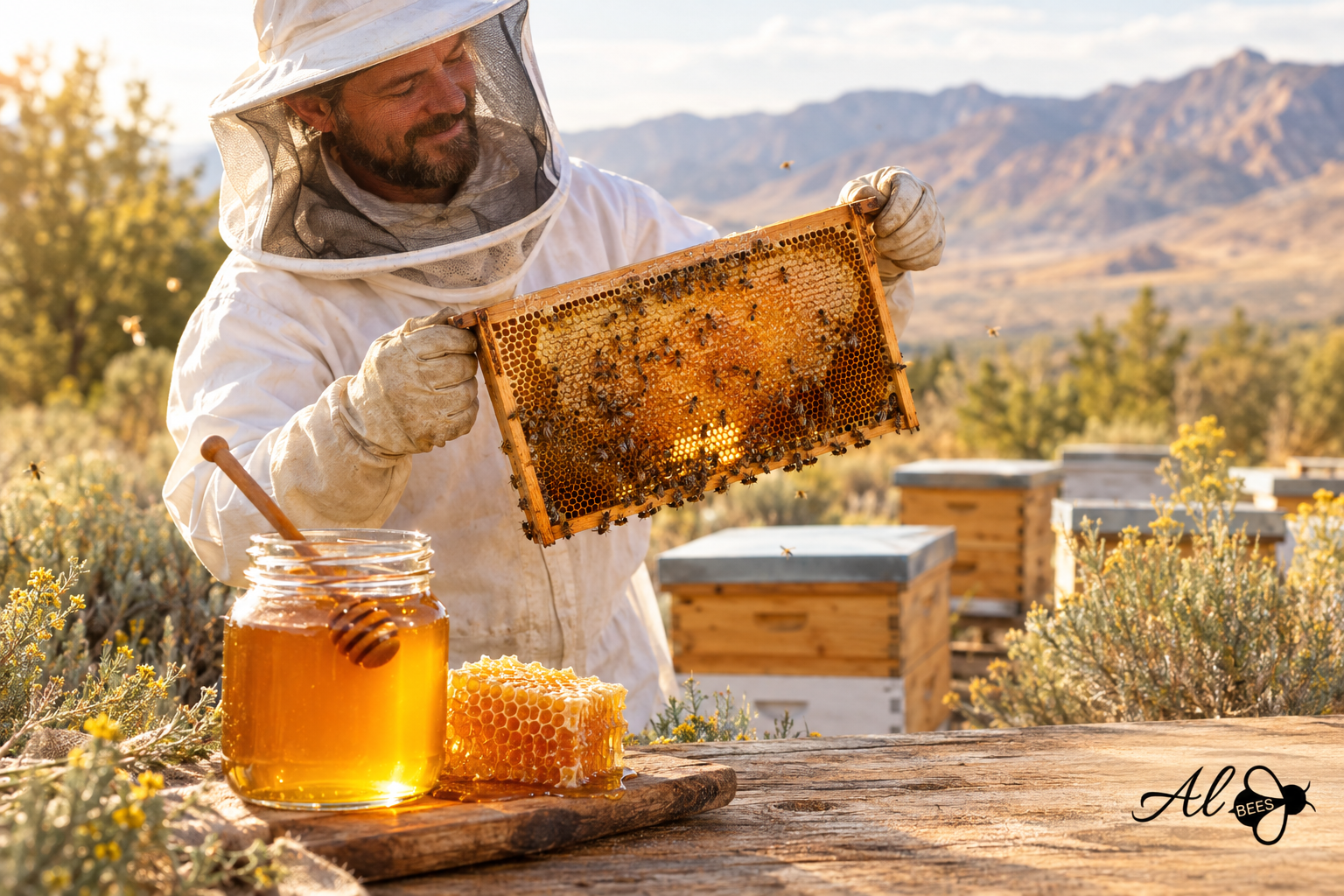
Summary: This guide explains how buying raw honey directly from a local beekeeper helps consumers make informed choices. It covers honey purity, harvest dates, floral sources, processing methods, and batch records. Readers will also learn about the benefits of local sourcing, proper storage, and common honey myths while discovering how to choose quality raw honey from Al Bee’s Sierra Nevada Honey.
A common myth says all honey is the same. Yet, heat, filtration, floral sources, and handling can change what reaches your jar. Buying local raw honey helps you ask better questions and choose with confidence.
What Makes Buying Raw Honey Directly From a Beekeeper Worth It?
Buying honey directly from an apiary gives you a clearer view of its source, harvest, and handling. You can ask how the bees are kept, where they forage, and how the honey reaches your table.
Al Bee’s Pure Nevada Honey LLC manages hives on pesticide-free properties along Sierra Nevada mountain drainages. Its focus is pure, raw honey with regional character. Buying direct can help you connect your food to the land and the people who produce it.
A trustworthy beekeeper welcomes questions, explains their methods, and is clear about what they can verify. That is where an informed purchase begins.
Why Does Raw, Unheated, and Unfiltered Honey Matter?
Raw honey is honey that has not undergone the usual high-heat processing used in some commercial products. Unheated honey can retain more of its natural enzymes and heat-sensitive compounds, depending on how it is handled.
Honey naturally contains sugars, small amounts of amino acids, enzymes, and plant-derived compounds called polyphenols. Some of these compounds have antioxidant activity. Gentle handling helps preserve more of honey's natural character, although the exact amount varies by batch and floral source.
Unfiltered honey may also retain fine pollen particles and tiny traces of beeswax. This can give it a cloudy look or a thicker texture. Light straining can remove larger pieces of wax without making honey fully filtered.
One thing to remember: raw does not mean that every jar has the same nutrients or proven health effects. Honey is still a sugar-rich food. Its natural compounds are valuable, but they do not make it a cure for illness.
How Can You Check a Beekeeper's Honey Before Buying?
A good purchase starts with a few simple questions. You do not need to be a honey expert. You only need enough information to understand what is inside the jar and how it was made.
1. Ask When the Honey Was Harvested
Harvest dates help you understand a batch's age and seasonal background. Ask when the honey was collected and bottled. Freshness alone does not prove purity, but clear dates make the product easier to trace.
2. Find Out Where the Hives Are Located
Hive location shapes the honey's story. Ask whether the bees forage near mountain drainages, open fields, orchards, or mixed wild plants. Al Bee's identifies its hive sites as pesticide-free properties along the Sierra Nevada drainages.
3. Ask About Floral Sources
Bees visit different flowers as the seasons change. Their nectar can affect honey's color, aroma, taste, and texture. Ask which plants were flowering during harvest. If the beekeeper cannot identify one dominant flower, the honey may be a blend of nectar sources.
4. Understand Extraction and Filtration
Honey extraction usually involves removing wax caps from honeycomb and spinning the frames in an extractor. The honey is then drained and strained to remove larger wax pieces.
Ask whether the honey is heated during extraction, bottling, or storage. Also ask whether it is finely filtered or simply strained. These steps affect how much natural material remains in the final product.
5. Look for Batch Records and Honest Labels
Batch records connect a jar to its harvest and handling history. Ask whether the seller tracks harvest dates, hive locations, extraction dates, and bottling details. A seller may not share every record publicly, but should explain what information is available.
Check the ingredient list, too. Pure honey should list honey as its sole ingredient. Cinnamon honey or other flavored products should clearly identify added ingredients. Never assume a raw label alone proves that a product is free from added sugars.
Why Buying Local Raw Honey Matters in Nevada
Buying local raw honey supports regional beekeepers and gives you a closer connection to the land around you. For Nevada residents, Sierra Nevada honey offers a taste shaped by local forage, changing seasons, and the conditions in which bees gather nectar.
Local sourcing can also make it easier to ask questions directly. You can learn about hive care, harvest practices, and seasonal changes from the people who manage the colonies. That connection adds value beyond the honey itself.
Some shoppers buy local honey hoping it will ease seasonal allergies. However, evidence does not show that eating local honey reliably prevents or treats pollen allergies. Honey pollen may differ from the airborne pollen that triggers symptoms, so it should not replace proven allergy care.
How Should You Store Raw Honey at Home?
Raw honey keeps well when stored properly. Keep the lid tightly closed and place the jar in a cool, dry cupboard away from direct sunlight. Avoid moisture, as water can increase the risk of fermentation.
Honey may crystallize over time. This is a natural change, not proof of spoilage or added sugar. To soften it, place the closed jar in warm water. Avoid boiling water or direct high heat if you want to preserve more heat-sensitive compounds.
Which Raw Honey Should You Buy From Al Bee's?
The best raw honey to buy is one whose source, handling, and ingredients you can understand. Al Bee's offers Sierra Nevada raw honey in several sizes, including glass jars, plastic bottles, and convenient honey sticks.
Choose a small jar if you want to taste the honey first. A larger jar may suit your kitchen if you use honey often. Honey sticks are handy for outdoor activities, but honey is not a complete electrolyte drink. Pair it with water and suitable electrolyte sources when exercise demands them.
Choose Honey With a Story You Can Trace
Buying direct helps you understand honey's source, processing, and quality while supporting regional beekeeping and informed food choices.
At Al Bee's, we offer Al Bees Sierra Nevada Honey LLC, 100% raw, unfiltered Sierra Nevada mountain honey from hives on pesticide-free properties along local mountain drainages, with no heat processing, additives, or foreign sugar blending. Browse our online store, email snhbees@gmail.com, or call (775) 686-0323. Follow our Facebook page and Instagram for updates.
FAQs About Buying Raw Honey Directly From a Beekeeper
1. Is raw honey better than regular honey?
Raw honey may retain more natural enzymes and heat-sensitive compounds. Its exact nutritional profile varies, and both raw and processed honey remain sources of sugar.
2. Does unfiltered honey contain pollen?
It may contain small amounts of pollen, along with fine wax particles. The amount varies, and unfiltered honey is not a reliable treatment for seasonal allergies.
3. How can you tell if honey is pure?
Check the ingredients, ask about sourcing and processing, and look for traceable batch details. Appearance, thickness, and home tests cannot reliably prove honey purity.
4. Does raw honey expire?
Properly stored honey can last for years. Keep moisture out and the lid sealed. Crystallization is normal, but unusual odors or signs of fermentation warrant caution.
5. Can you buy Al Bee's honey online?
Yes. You can browse raw honey jars, bottles, honey sticks, and other honey products through the officialAl Bee's online store.